Have you ever taken off your socks at the end of the day and noticed deep indentations around your ankles?
Maybe the marks disappear after a few minutes. Or perhaps they stay visible for hours, leaving noticeable grooves in your skin.
Most people assume these marks are simply caused by tight socks. And sometimes, that is exactly what is happening.
But what if your socks are not particularly tight? What if the indentations seem to be getting deeper, your ankles look swollen, or your legs feel unusually heavy by the evening?
Deep sock marks can sometimes be an early clue that fluid is accumulating in your lower legs. In certain cases, that swelling may be associated with an underlying circulation condition called chronic venous insufficiency (CVI).
At America's Vein Doctors by Allure Medical, we believe that understanding seemingly minor changes in your legs can help you recognize when further evaluation may be appropriate.
Let's explore what sock marks can tell you about your circulation, when they are normal, and when they may indicate something more significant.
Key Takeaways
- •Mild sock marks that fade quickly are common and usually harmless.
- •Deep, persistent sock marks may be more noticeable when fluid accumulates in the lower legs.
- •Chronic venous insufficiency is one possible cause of recurring lower-leg swelling that can make sock marks more pronounced.
- •Sock marks alone cannot diagnose poor circulation, but persistent or worsening swelling deserves medical attention.
- •A venous duplex ultrasound can help determine whether venous reflux is contributing to swelling.
The Short Answer: Why Do Socks Leave Deep Marks on Your Legs?
Socks leave indentations because their elastic bands apply pressure to the skin. Mild marks that disappear relatively quickly are common and usually harmless.
However, deep, persistent sock marks may be more noticeable when fluid accumulates in the lower legs, a condition known as edema.
Leg edema can develop for several reasons, including prolonged sitting or standing, certain medications, heart or kidney conditions, and chronic venous insufficiency.
When sock indentations occur alongside recurring ankle swelling, leg heaviness, aching, or skin discoloration, an underlying venous circulation problem may be contributing.
Sock marks alone cannot diagnose poor circulation, but persistent or worsening swelling deserves medical attention.
Are Sock Marks on Your Legs Normal?
Yes. In many cases, sock marks are completely normal.
Most socks contain elastic material designed to keep them in place. As the elastic presses against your skin, it can leave temporary impressions.
You may notice these marks more frequently if:
- •Your socks have tight elastic bands.
- •You have been sitting or standing for several hours.
- •Your legs are mildly swollen after a long day.
- •You have been traveling or sitting for an extended period.
- •Your socks are particularly snug around the ankles or calves.
A shallow indentation that fades soon after removing your socks is generally less concerning than persistent marks accompanied by visible swelling.
However, the depth of a sock mark alone does not determine whether you have a medical condition.
The more important questions are whether your legs are swelling, whether the swelling keeps returning, and whether other symptoms are developing.
What Does It Mean When Sock Marks Are Deep?
Deep sock indentations may occur when elastic bands press into swollen tissue.
When excess fluid accumulates beneath the skin, the surrounding tissue can become more susceptible to visible impressions.
This is particularly common around the ankles because gravity encourages fluid to collect in the lowest parts of the body when you are sitting or standing.
Some patients notice that their ankles look relatively normal in the morning but become progressively more swollen throughout the day.
By evening, removing their socks reveals pronounced rings around the lower legs.
This pattern can occur with dependent edema, including swelling related to chronic venous insufficiency.
However, deep sock marks are not a reliable test for vein disease on their own. The underlying cause must be determined through medical history, examination, and appropriate testing.
What Is Pitting Edema?
Pitting edema is a type of swelling in which pressure applied to the skin leaves a temporary indentation.
For example, when a healthcare professional gently presses a finger against a swollen area near the shin or ankle, a small depression may remain after the pressure is released.
This happens because excess fluid is present within the tissue.
Pitting edema can affect the feet, ankles, and lower legs.
Common signs include:
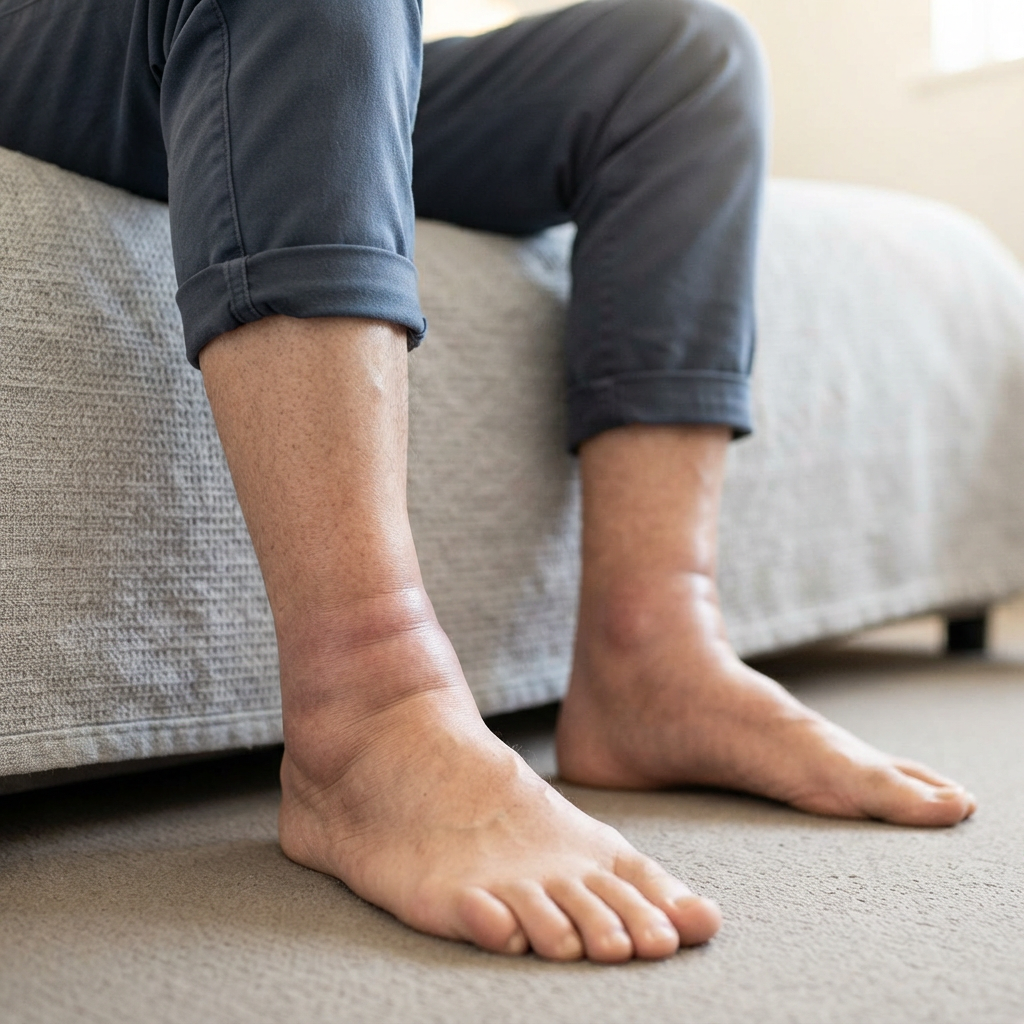
- •Swelling around the ankles or feet.
- •Skin that appears stretched or shiny.
- •Indentations left by socks or footwear.
- •Temporary depressions after pressure is applied to the skin.
- •Legs that feel heavy, tight, or uncomfortable.
- •Swelling that becomes more noticeable later in the day.
Importantly, sock indentations and pitting edema are not exactly the same thing.
A sock band can leave a mark on normal skin. Pitting edema is a clinical finding that involves an indentation remaining after direct pressure is applied to swollen tissue.
If you suspect you have pitting edema, a healthcare professional can evaluate the swelling and determine whether additional testing is necessary.
Can Chronic Venous Insufficiency Cause Deep Sock Marks?
Yes. Chronic venous insufficiency is one possible cause of recurring lower-leg swelling that can make sock marks more noticeable.
To understand why, it helps to understand how your veins work.
Your arteries carry blood away from your heart, while your veins return blood toward it.
In your legs, blood must travel upward against gravity. Healthy veins contain one-way valves that help prevent blood from flowing backward.
When these valves weaken or stop functioning properly, blood may flow backward and accumulate in the lower extremities.
This condition is known as venous reflux, a common mechanism of chronic venous insufficiency.
Over time, increased pressure inside the veins can contribute to fluid leaking into surrounding tissues.
The result may be persistent or recurring swelling around the ankles and lower legs.
As that swelling increases, socks may leave deeper indentations than they previously did.
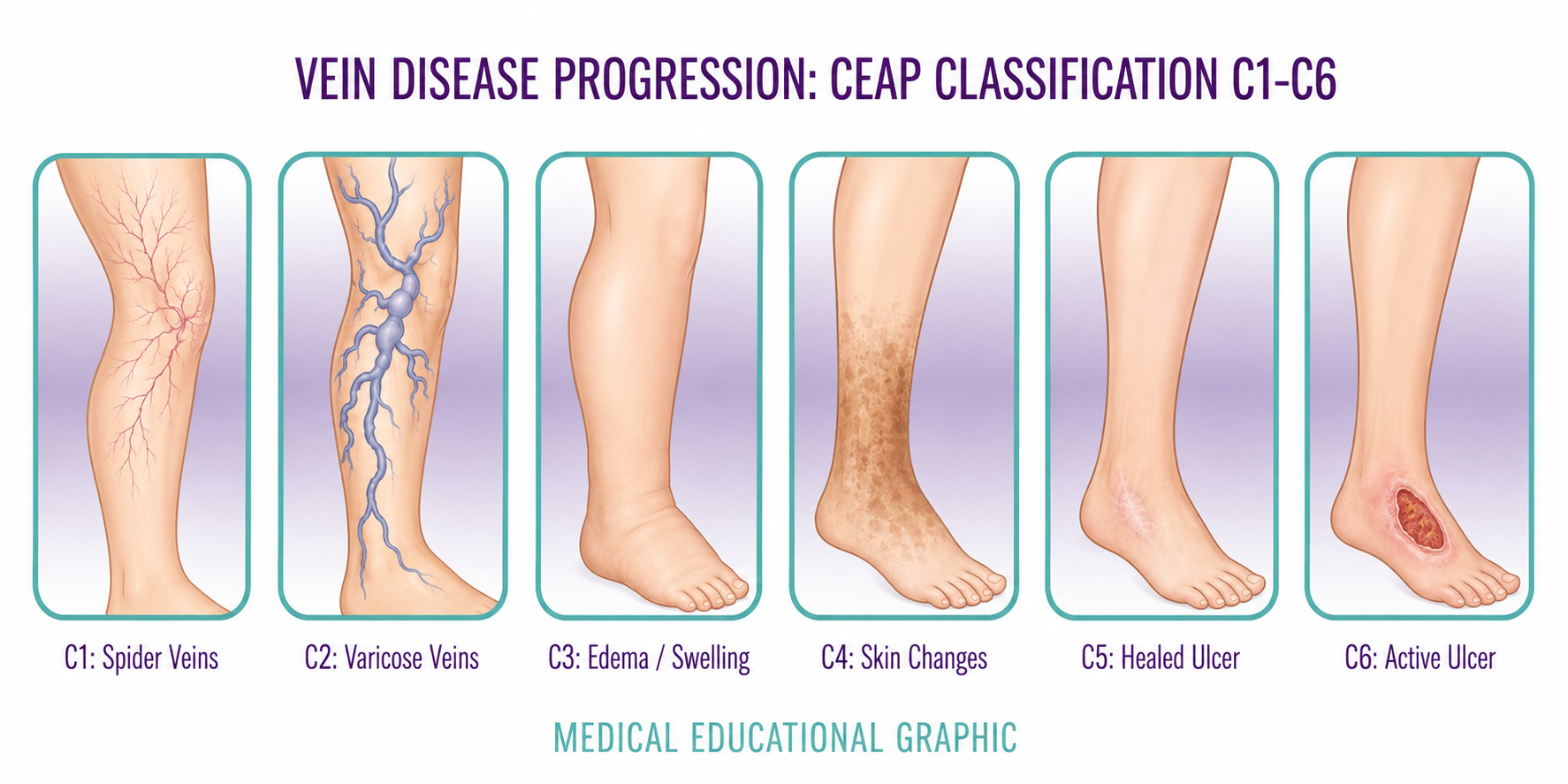
Other symptoms of chronic venous insufficiency can include:
- •Aching or throbbing legs.
- •Heaviness or fatigue in the lower extremities.
- •Swelling that worsens after prolonged standing.
- •Visible varicose veins.
- •Itching or irritation around the ankles.
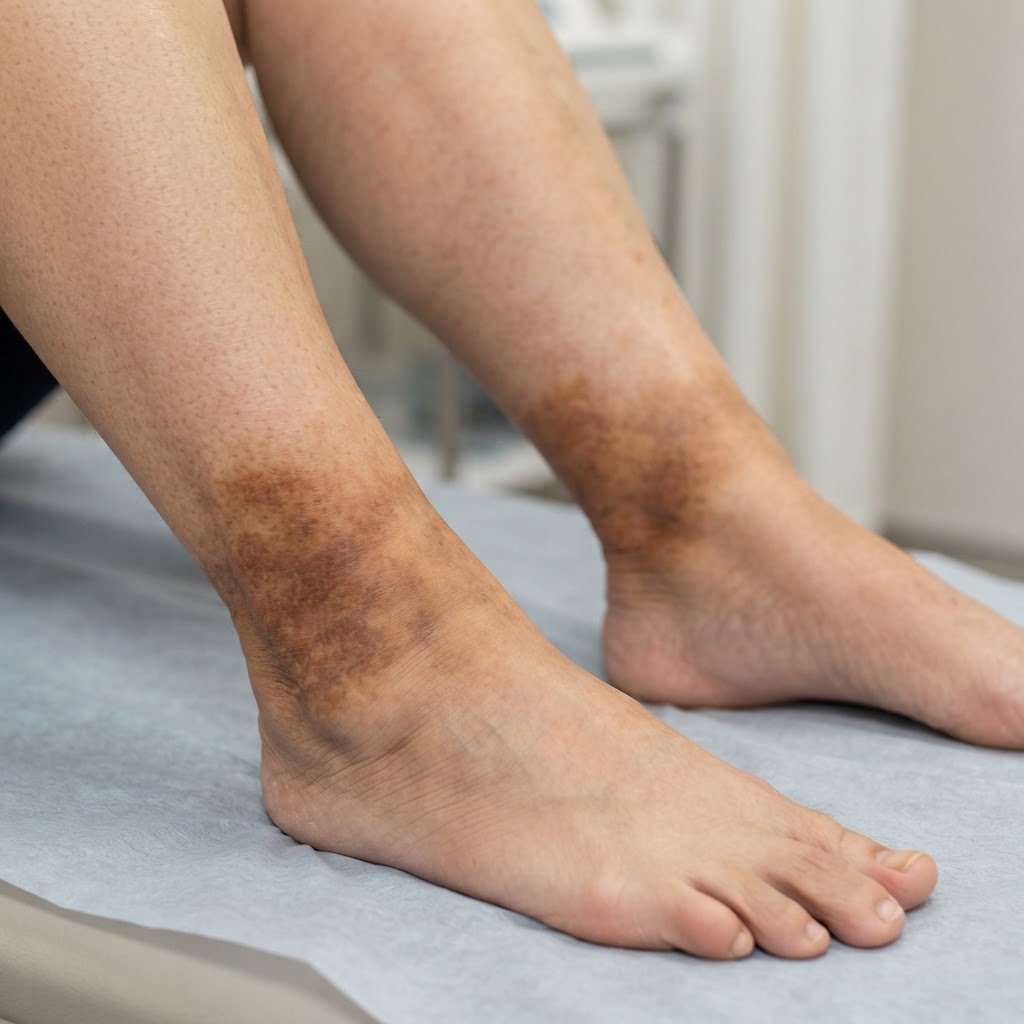
- •Brown or reddish skin discoloration.
- •Skin thickening or changes in texture.
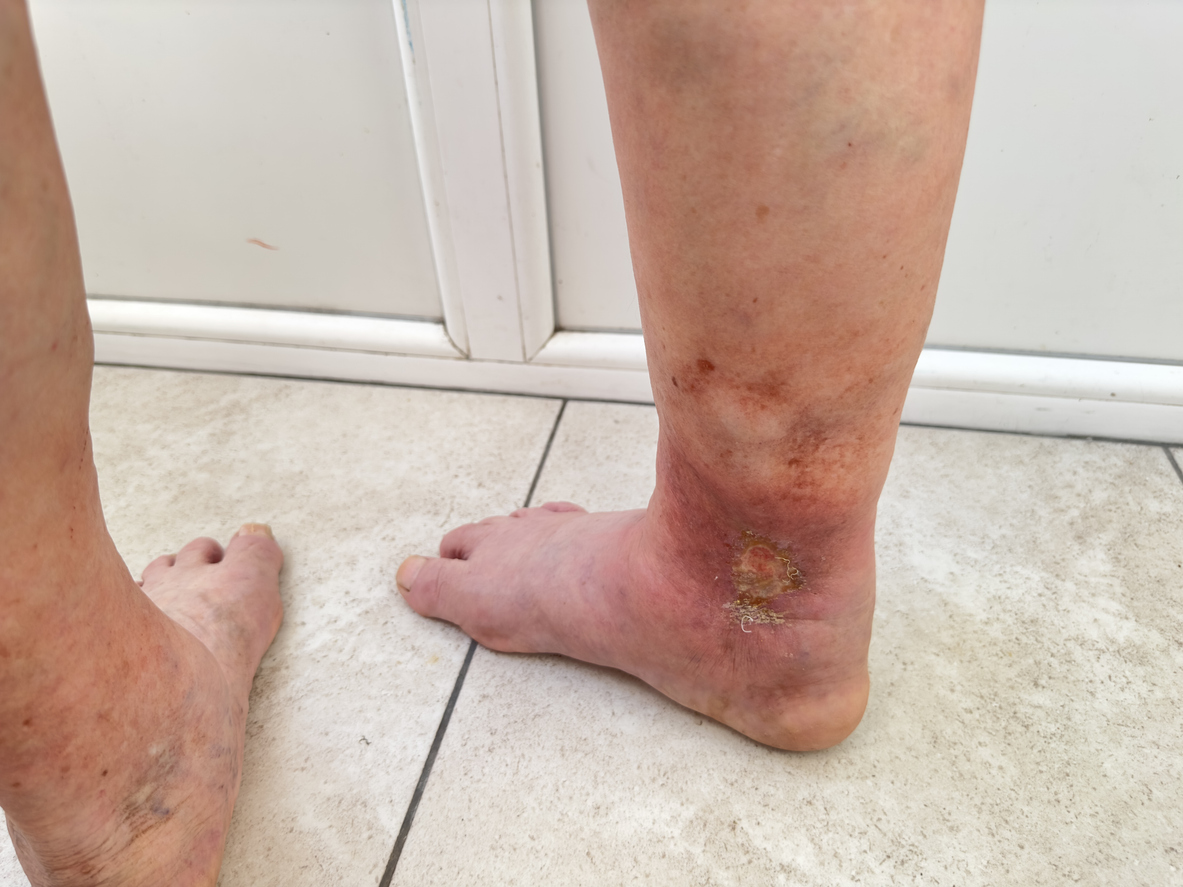
- •In more advanced cases, slow-healing wounds near the ankles.
Not everyone with chronic venous insufficiency develops visible varicose veins.
In fact, some patients experience swelling and leg discomfort even when abnormal veins are not immediately apparent on the skin's surface.
This is one reason a proper medical evaluation can be valuable.
Related reading: Chronic Venous Insufficiency: Symptoms, Causes, and Why It Is Often Misdiagnosed.
Why Are Sock Marks Worse at the End of the Day?
One of the most common patterns associated with dependent leg swelling is that symptoms become more noticeable as the day progresses.
Gravity plays an important role.
When you spend hours sitting or standing, fluid may accumulate in your lower extremities.
Normally, the calf muscles help move blood upward through the veins whenever you walk or flex your ankles.
This is sometimes called the calf muscle pump.
When you remain relatively still for long periods, this pumping action becomes less effective.
If your venous valves are also malfunctioning, increased pressure within the leg veins may contribute to additional fluid accumulation.
This can explain why someone might notice:
- •Minimal ankle swelling after waking up.
- •Mild tightness in their shoes by lunchtime.
- •Heavier or more uncomfortable legs in the afternoon.
- •Deep sock indentations when getting ready for bed.
Swelling that improves overnight and returns throughout the day can occur with venous insufficiency, although other causes are possible.
If this pattern becomes frequent, it is worth discussing with your healthcare provider.
What Else Can Cause Deep Sock Indentations and Swollen Ankles?
Although chronic venous insufficiency is an important possibility, it is not the only explanation.
Several conditions can cause fluid retention or swelling in the lower extremities.
1. Prolonged Sitting or Standing
Remaining in one position for extended periods can encourage fluid to collect around the ankles.
This is common during long flights, road trips, and workdays that involve prolonged standing.
2. Medication-Related Swelling
Certain medications can contribute to ankle swelling, including some blood pressure medications, anti-inflammatory medications, and corticosteroids.
Never discontinue a prescribed medication without consulting your healthcare provider.
3. Heart Conditions
Some heart conditions can cause fluid to accumulate in the legs.
Swelling associated with heart problems may occur alongside fatigue, shortness of breath, or difficulty breathing while lying flat.
4. Kidney or Liver Conditions
The kidneys and liver play important roles in maintaining fluid balance.
Certain disorders affecting these organs can contribute to swelling in the lower extremities.
5. Lymphedema
Lymphedema develops when the lymphatic system cannot adequately transport fluid away from tissues.
It may cause persistent swelling and, over time, changes in skin texture.
6. Deep Vein Thrombosis (DVT)
A blood clot in a deep leg vein can cause swelling, often affecting one leg.
Sudden swelling, particularly when accompanied by pain, warmth, or redness, requires prompt medical evaluation.
7. Chronic Venous Insufficiency
When venous valves fail to move blood efficiently toward the heart, increased pressure can contribute to recurring swelling, heaviness, and skin changes.
Because these conditions require different approaches to treatment, identifying the cause of the swelling is essential.
Sock Marks vs. Edema: How Can You Tell the Difference?
| Finding | Ordinary Sock Indentations | Possible Edema |
|---|---|---|
| Cause | Pressure from elastic | Fluid accumulation in tissue |
| Appearance | Usually limited to the sock band | May involve broader ankle or foot swelling |
| Duration | Often fades after removing socks | Swelling may persist or recur |
| Other symptoms | Usually none | May include tightness, heaviness, or aching |
| Time of day | Can occur anytime | May worsen after prolonged sitting or standing |
| Medical evaluation | Usually unnecessary if isolated | Recommended when persistent, unexplained, or worsening |
This comparison is intended as general guidance, not a diagnostic test.
Ordinary sock marks and edema can occur together, and some causes of edema require medical attention even when symptoms appear mild.
Does Having Deep Sock Marks Mean You Have Poor Circulation?
Not necessarily.
The phrase poor circulation is often used to describe several different conditions, but there is an important distinction between arterial and venous circulation.
Arterial circulation problems occur when blood flow from the heart to the legs is reduced.
Venous circulation problems occur when blood has difficulty returning from the legs toward the heart.
Chronic venous insufficiency is a venous circulation disorder.
It may contribute to swelling, heaviness, aching, and changes in skin appearance.
Arterial disease, on the other hand, may cause symptoms such as leg pain during walking, cold feet, or wounds that do not heal.
These conditions can sometimes coexist, but they require different diagnostic approaches.
Deep sock marks do not establish either diagnosis.
However, when sock indentations are accompanied by recurring swelling and other symptoms of venous disease, evaluating venous circulation may be appropriate.
Can You Have Venous Insufficiency Without Varicose Veins?
Absolutely.
One misconception about vein disease is that it always causes large, bulging veins that are easy to see.
While varicose veins are a common sign of venous insufficiency, some patients develop symptoms without prominent visible veins.
These symptoms may include:
- •Recurring ankle swelling.
- •Deep sock marks associated with swelling.
- •Heavy or tired legs.
- •Aching after prolonged standing.
- •Itching or discomfort around the ankles.
- •Skin discoloration.
The veins responsible for abnormal blood flow may lie beneath the skin.
A diagnostic ultrasound can help determine whether venous reflux or another venous abnormality is present.
How Is Leg Swelling Caused by Vein Disease Diagnosed?
An evaluation begins with understanding your symptoms and medical history.
A healthcare professional may ask whether your swelling affects one or both legs, whether it improves overnight, and whether you experience aching, heaviness, or skin changes.
The examination may also include checking for edema, evaluating pulses, and looking for signs of venous or arterial disease.
When chronic venous insufficiency is suspected, a venous duplex ultrasound may be recommended.
What Is a Venous Duplex Ultrasound?
A duplex ultrasound is a noninvasive test that uses sound waves to evaluate blood flow within the veins.
It can help identify:
- •Malfunctioning venous valves.
- •Abnormal backward blood flow, known as reflux.
- •Certain forms of venous obstruction.
- •Evidence of previous blood clots.
- •Other abnormalities affecting venous circulation.
The test does not require surgical incisions.
Ultrasound findings, combined with your symptoms and physical examination, can help determine whether venous disease is contributing to your swelling.
How Can You Reduce Deep Sock Marks and Ankle Swelling?
The best approach depends on what is causing the swelling.
For mild swelling associated with prolonged sitting or standing, certain lifestyle measures may help.
Walk and Move Regularly
Walking activates the calf muscles, helping move venous blood upward toward the heart.
If your job requires long periods of sitting, taking regular movement breaks may be beneficial.
Elevate Your Legs
Elevating your legs when resting can help reduce gravity-related fluid accumulation.
Avoid Remaining in One Position Too Long
Alternating between sitting, standing, and walking can help limit dependent swelling.
Review Your Socks and Footwear
Socks with overly tight elastic bands may leave deeper marks.
Choosing properly fitting socks can reduce localized pressure, although it will not treat an underlying medical cause of swelling.
Discuss Compression Stockings With Your Healthcare Provider
Graduated compression stockings may help reduce swelling and support venous circulation in appropriately selected patients.
However, compression is not appropriate for everyone. Patients with certain arterial circulation disorders or other medical conditions may require assessment before using compression garments.
Address the Underlying Condition
If swelling is caused by chronic venous insufficiency, lifestyle measures may help manage symptoms but do not repair malfunctioning vein valves.
Additional treatment may be appropriate when clinically significant venous reflux is identified.
Can Treating Venous Insufficiency Help Reduce Ankle Swelling?
For patients whose swelling is caused or significantly worsened by venous reflux, appropriate treatment of the underlying vein condition may improve symptoms.
Treatment options depend on the patient's medical history, examination, ultrasound findings, and the severity of venous disease.
Depending on the condition, management may include compression therapy, exercise, leg elevation, and minimally invasive vein procedures.
Procedures such as endovenous ablation are designed to close certain malfunctioning veins so that blood can be redirected through healthier venous pathways.
Not every patient with ankle swelling requires a vein procedure.
Furthermore, treating venous reflux does not guarantee complete resolution of swelling, particularly when other medical conditions contribute.
The first step is determining what is actually causing the problem.
When Should You Be Concerned About Sock Marks?
Occasional sock indentations are usually not a reason for alarm.
However, consider scheduling a medical evaluation if you notice:
- •Deep sock marks occurring regularly with visible ankle swelling.
- •Swelling that becomes progressively worse.
- •One leg consistently appearing more swollen than the other.
- •Persistent heaviness or aching in your legs.
- •Skin discoloration around the ankles.
- •Itching, irritation, or thickening of the lower-leg skin.
- •Swelling that does not improve with rest.
- •A wound near the ankle that is slow to heal.
Seek Prompt Medical Attention
Seek prompt medical attention if swelling develops suddenly, particularly in one leg, or is accompanied by pain, warmth, or redness.
If swelling occurs with chest pain, sudden shortness of breath, coughing up blood, or fainting, call 911 immediately.
Frequently Asked Questions About Sock Marks on Legs
Why do my socks leave deep marks even when they are not tight?
Deep marks may be more noticeable when your ankles or lower legs are swollen. Fluid accumulation can make the tissue more susceptible to indentation. However, sock marks alone cannot confirm edema or determine its cause.
Are deep sock marks a sign of heart problems?
They can occur in people with swelling related to heart conditions, but they are not specific to heart disease. Medication effects, venous insufficiency, kidney disorders, and prolonged sitting or standing can also contribute to swelling.
Can dehydration cause deep sock marks?
Dehydration is not a typical direct cause of pitting edema. Deep sock marks associated with swelling are more often related to fluid distribution, venous pressure, medications, or other medical conditions.
Why do I have sock marks around my ankles every day?
Daily sock marks may simply reflect pressure from the elastic band. However, if they occur with recurring ankle swelling, especially later in the day, it is worth evaluating whether dependent edema or an underlying medical condition is contributing.
Can varicose veins cause deep sock indentations?
Varicose veins and chronic venous insufficiency can contribute to ankle swelling. When fluid accumulates in the surrounding tissue, sock bands may leave more pronounced indentations.
Is pitting edema always serious?
No. Pitting edema can have relatively mild causes, but it may also be associated with conditions affecting the heart, kidneys, liver, or venous circulation. Persistent or unexplained edema should be evaluated.
Why are my ankles swollen at night but normal in the morning?
Swelling that develops throughout the day and improves overnight can occur when fluid accumulates in the lower legs due to gravity. Chronic venous insufficiency is one possible cause, but other conditions should also be considered.
Do compression socks help with ankle swelling?
Properly selected graduated compression stockings can help manage swelling associated with certain venous conditions. They should be used according to medical guidance, especially when arterial circulation problems or other medical conditions are present.
Can poor circulation cause sock marks without visible varicose veins?
Yes. Venous insufficiency can contribute to swelling even when large varicose veins are not visible. However, sock marks alone do not establish a circulation disorder.
What kind of doctor should I see for persistent sock marks and ankle swelling?
A primary care provider can assess common causes of swelling and determine whether additional testing is needed. If a venous circulation problem is suspected, a vein specialist can evaluate venous function and discuss appropriate management options.
Your Socks May Be Telling You Something About Your Leg Health
It is easy to dismiss deep sock marks as a minor inconvenience, especially when they do not cause significant discomfort.
And in many cases, they are simply the result of pressure from the elastic in your socks.
But when deep indentations become a recurring problem, particularly alongside ankle swelling, leg heaviness, aching, or skin changes, they may be a clue that something more is happening beneath the surface.
Chronic venous insufficiency is one possible explanation, and identifying it early may help patients manage symptoms and reduce the risk of progressive skin and tissue changes.
At America's Vein Doctors by Allure Medical, we help patients better understand their leg symptoms and determine whether an underlying venous condition may be contributing.
You don't need to wait until visible varicose veins appear to ask questions about your circulation.
Schedule a Vein EvaluationThis article is intended for educational purposes only and should not be considered a substitute for professional medical advice, diagnosis, or treatment.
About the Author
Dr. Robert MussonAmerica's Vein Doctors by Allure Medical
Dr. Robert Musson contributes educational content focused on chronic venous insufficiency, venous circulation, and the symptoms and complications associated with vein disease.