Most people think vein disease begins and ends with varicose veins. It does not. Varicose veins are one possible sign on a spectrum of chronic venous disease, which can range from small spider veins to leg swelling, skin changes, and open wounds called venous ulcers.
Recognizing the stages of vein disease can help you understand when a cosmetic concern may also deserve a medical evaluation. Earlier assessment matters because chronic venous insufficiency can worsen over time, although not everyone progresses through every stage.
Quick Answer
The six visible stages of vein disease are C1 spider or reticular veins, C2 varicose veins, C3 leg swelling, C4 skin changes, C5 a healed venous ulcer, and C6 an active venous ulcer. Persistent swelling, skin discoloration, or any leg wound should be evaluated promptly.
What are the six stages of vein disease?
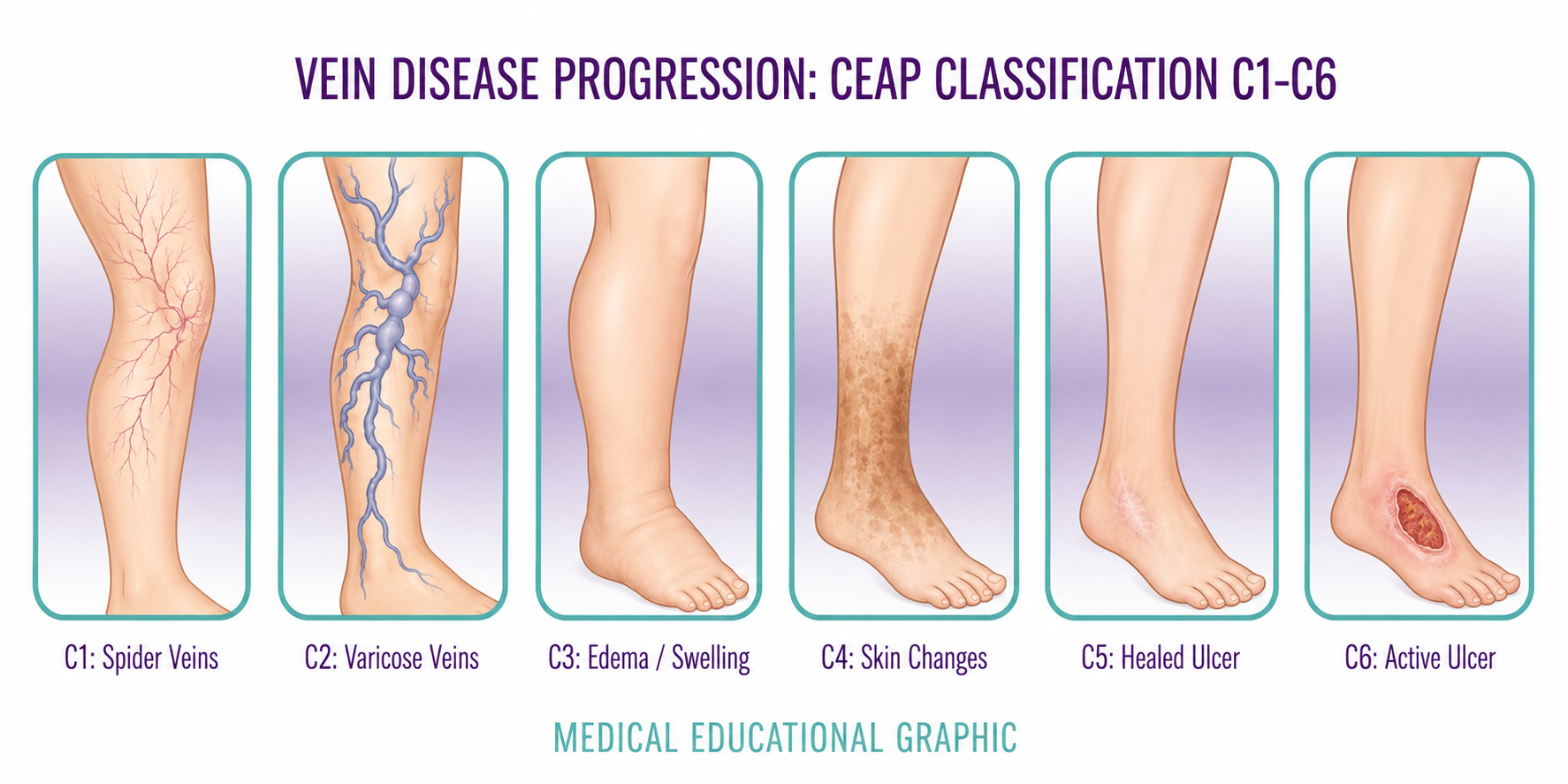
Clinicians commonly describe the stages of vein disease using the clinical portion of the CEAP classification. CEAP stands for Clinical, Etiologic, Anatomic, and Pathophysiologic. It includes C0, meaning no visible or palpable signs, followed by six visible classes from C1 through C6. CEAP describes what is present in a limb; it is not a guarantee that a person will move through every class in sequence.
| CEAP | Common name | What you may notice | When to act |
|---|---|---|---|
| C1 | Spider or reticular veins | Small red, blue, or purple vessels near the skin | Evaluate if symptoms such as aching, heaviness, or swelling are present |
| C2 | Varicose veins | Enlarged, twisted, or bulging veins | Schedule an evaluation if painful, tender, itchy, or limiting activity |
| C3 | Edema | Persistent lower-leg, ankle, or foot swelling | Arrange medical evaluation; swelling has several possible causes |
| C4 | Skin changes | Discoloration, eczema-like irritation, or hardened skin | Seek prompt evaluation to reduce the risk of further tissue damage |
| C5 | Healed venous ulcer | A previously open wound, usually near the ankle, has closed | Treat the underlying venous problem and monitor for recurrence |
| C6 | Active venous ulcer | An open, slow-healing wound, commonly near the ankle | Prompt wound and vascular care are important |
Clinical source: 2020 CEAP classification update (Journal of Vascular Surgery: Venous and Lymphatic Disorders).
Understanding chronic venous insufficiency
Healthy leg veins return blood toward the heart. Small one-way valves help keep that blood moving in the correct direction. When valves do not close properly, blood can flow backward, or reflux, and collect in the lower legs. The resulting venous pressure can contribute to symptoms and changes in nearby tissue. This condition is called chronic venous insufficiency (CVI).
CVI is chronic, but it is treatable. Symptoms and visible findings do not always match, so a physical examination and, when appropriate, duplex ultrasound help determine whether reflux or another problem is present.
Stage 1 (C1): Spider veins and reticular veins
Spider veins are tiny red, blue, or purple vessels just beneath the skin. Reticular veins are slightly larger, often blue-green veins that may form a network. They frequently appear on the thighs, calves, behind the knees, or around the ankles.
Many C1 veins are primarily cosmetic and are not dangerous by themselves. However, spider veins accompanied by aching, heaviness, burning, itching, or swelling may justify a vein evaluation. Appearance alone cannot confirm or rule out deeper venous reflux.
Stage 2 (C2): Varicose veins
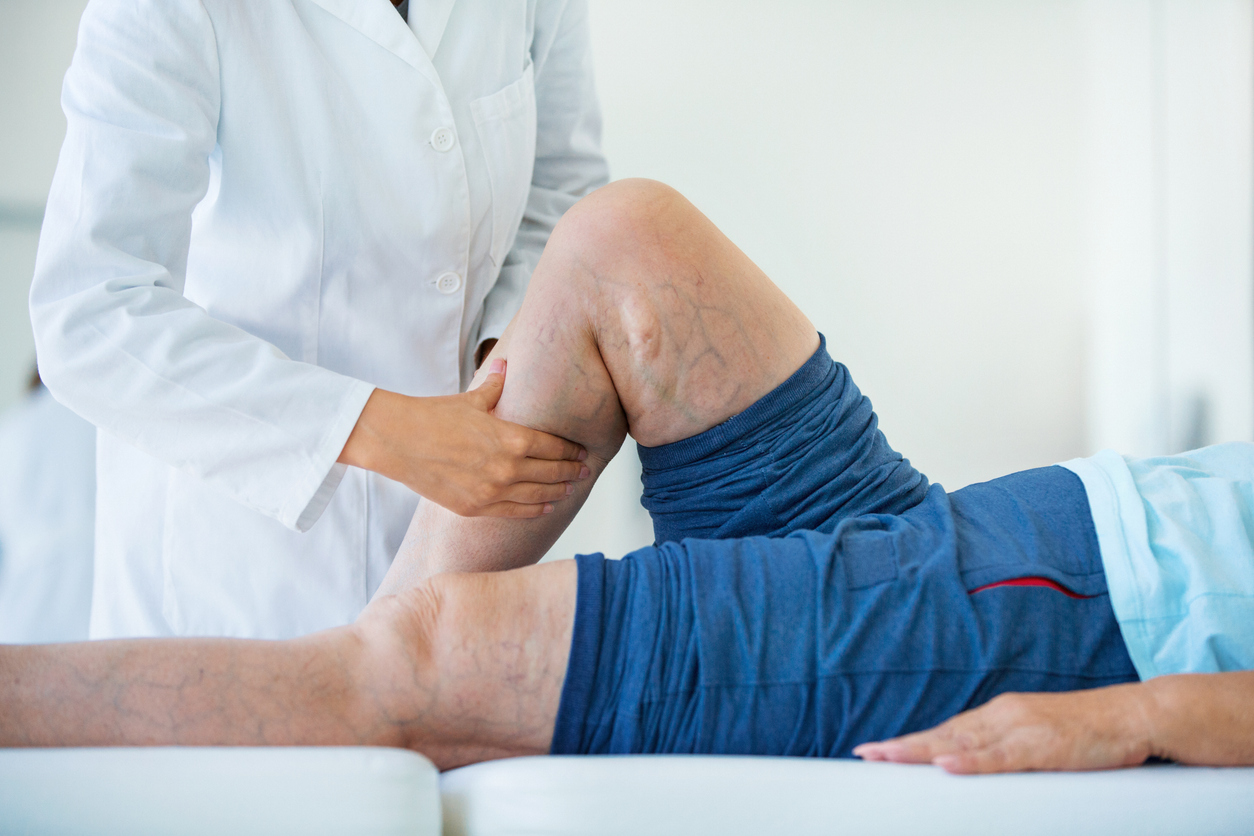
Varicose veins are enlarged, twisted veins that may bulge above the skin. They can occur when vein walls or valves do not function normally, allowing blood to pool.
Common vein disease symptoms at this stage include:
- Aching, throbbing, burning, or itching
- Leg heaviness or fatigue
- Tenderness along a visible vein
- Symptoms that worsen after prolonged sitting or standing
- Nighttime cramping or discomfort
A visible varicose vein may be the surface sign of a deeper circulation problem. An evaluation can identify whether symptoms are related to venous reflux and which, if any, vein treatments may be appropriate.
Stage 3 (C3): Leg swelling
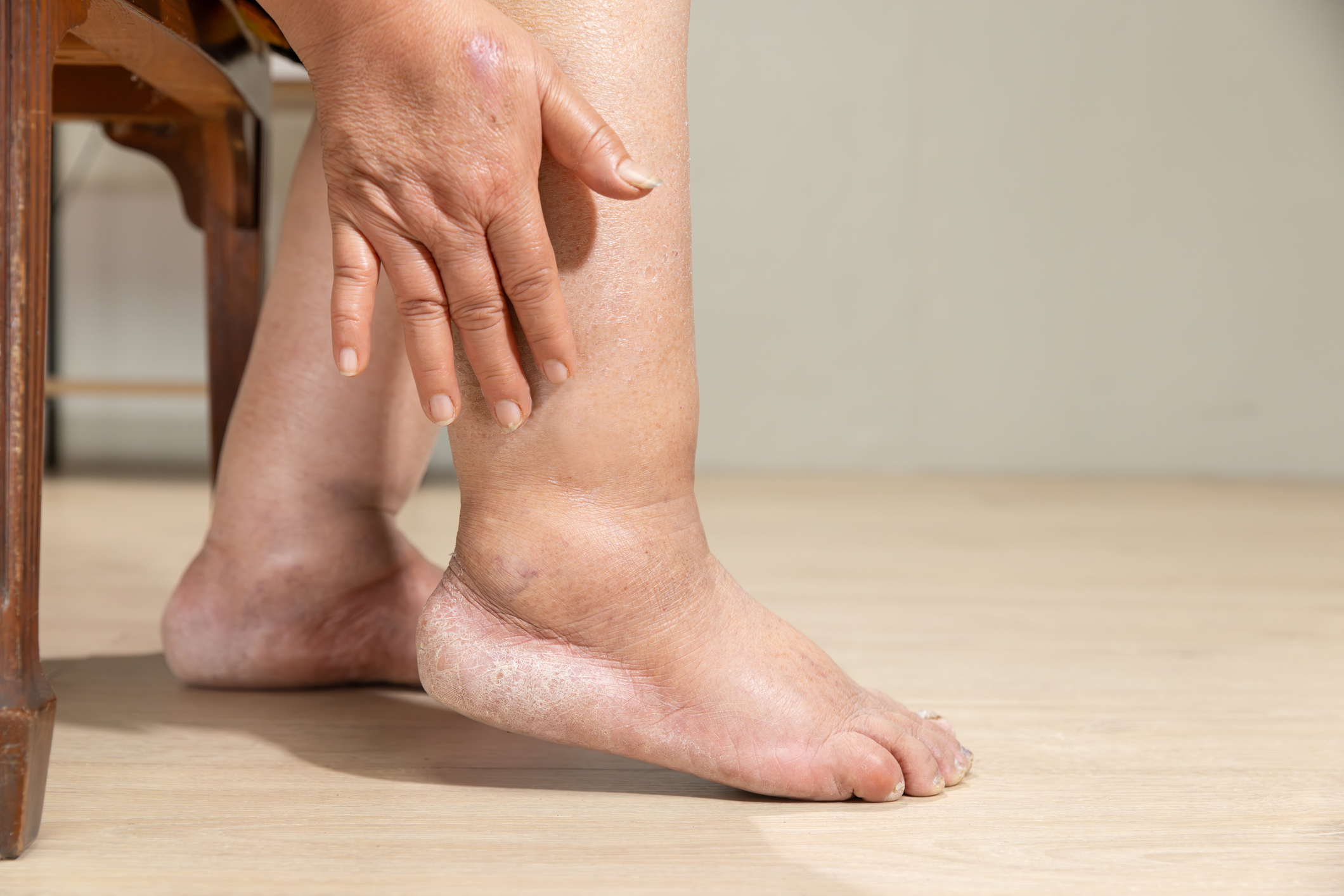
As venous pressure rises, fluid can collect in the tissues of the lower leg, ankle, or foot. You may notice ankles that swell by evening, shoes that feel tighter later in the day, sock marks that remain on the skin, or legs that feel persistently heavy.
Persistent leg swelling should not be self-diagnosed. Venous disease is one possible cause, but heart, kidney, liver, medication-related, lymphatic, and other conditions can also cause swelling. A clinician can determine which evaluation is appropriate.
Stage 4 (C4): Skin and tissue changes
At C4, chronic venous disease has begun to affect the skin or tissue, making the condition more than a cosmetic concern. Changes may include:
- Brown or reddish discoloration, often near the ankle
- Dry, itchy, eczema-like skin
- Hardened or thickened skin and tissue
- White scar-like areas
- Clusters of tiny veins around the ankle
These findings can resemble ordinary dry skin or eczema, but persistent ankle discoloration or tissue hardening should be assessed before a wound develops.
Stage 5 (C5): A healed venous ulcer
C5 means a venous ulcer has closed. The skin may look healed, but the underlying venous hypertension or reflux may still be present. Because venous ulcers can recur, a healed wound is an important opportunity to evaluate and manage the cause rather than focusing only on the surface of the skin.
Stage 6 (C6): An active venous ulcer
A venous ulcer is an open wound, usually in the lower leg or near the inside of the ankle, that may heal slowly or return after closing. Drainage, tenderness, odor, spreading redness, fever, or increasing pain requires prompt medical attention because infection or another complication may be present.
Effective care often combines wound management with evaluation of the underlying venous problem. Treatment is individualized and may include compression when medically appropriate, skin and wound care, and procedures that address diseased veins.
Why can vein disease get worse?
Chronic venous disease can progress when ongoing reflux or obstruction keeps pressure elevated in the leg veins. Over time, this pressure and inflammation can affect veins, skin, soft tissue, and lymphatic drainage. Progression is not inevitable or identical for everyone, but persistent symptoms should not be ignored.
Who is at higher risk for chronic venous disease?
Factors associated with venous disease include:
- Family history of venous disease
- Pregnancy or multiple pregnancies
- Older age
- Excess body weight
- Long periods of standing or sitting
- Previous deep vein thrombosis (DVT)
- Prior leg injury or surgery
- Limited physical activity
A risk factor does not determine your stage and does not mean advanced disease will develop. It does mean that new or persistent symptoms deserve attention.
When should you schedule a vein evaluation?
Consider scheduling a vein evaluation if you have any of the following:
- Visible varicose veins with pain, burning, itching, or heaviness
- Leg or ankle swelling that recurs several days each week
- Symptoms that interfere with work, exercise, sleep, or daily activity
- Brown or red discoloration near the ankle
- Skin thickening, hardening, or recurrent irritation
- A leg wound that is slow to heal
- A previously healed ulcer
- Bleeding from a varicose vein
A duplex ultrasound is a noninvasive test that shows vein structure and blood flow. Current vascular guidelines recommend duplex ultrasound as the diagnostic test of choice when evaluating lower-extremity venous reflux.
Important: When to seek urgent care
Do not wait for a routine vein visit if symptoms are sudden. New one-sided swelling, pain or tenderness, warmth, or redness can be signs of a deep vein thrombosis. Seek urgent medical evaluation.
Call 911 for difficulty breathing, chest pain, coughing up blood, fainting, or a fast or irregular heartbeat, which can be signs of a pulmonary embolism.
How is chronic venous insufficiency treated?
Treatment depends on symptoms, ultrasound findings, medical history, and the stage of disease. A personalized plan may include movement and exercise, leg elevation, weight management, skin care, compression when appropriate, wound care, or minimally invasive procedures that close a diseased vein and redirect blood through healthier pathways.
Allure Medical offers several approaches for selected patients, including endovenous laser therapy (EVLT), radiofrequency vein ablation, Varithena vein treatment, and sclerotherapy. The right option, if treatment is needed, can only be chosen after an evaluation.
Frequently asked questions about the stages of vein disease
What stage are varicose veins?
Uncomplicated varicose veins are classified as C2 in the clinical portion of CEAP. A person may also have swelling, skin changes, or ulcers that place the affected leg in a higher clinical class. Symptoms and ultrasound findings provide additional information.
Are spider veins dangerous?
Spider veins are usually not dangerous by themselves and are often cosmetic. When they occur with aching, heaviness, burning, itching, or swelling, an evaluation can help determine whether underlying venous reflux is present.
Can chronic venous insufficiency be reversed?
Lifestyle measures and treatment can reduce symptoms and control the effects of venous hypertension, but a damaged valve generally does not return to normal on its own. Minimally invasive procedures can close selected diseased veins so blood reroutes through healthier veins.
What happens if vein disease is ignored?
Some people remain stable, while others develop worsening varicose veins, chronic swelling, skin changes, or venous ulcers. Because progression varies, persistent or worsening symptoms should be evaluated instead of assumed to be harmless.
Can you have vein disease without visible varicose veins?
Yes. Symptoms such as swelling, heaviness, aching, or skin changes may occur even when prominent varicose veins are not visible. An examination and duplex ultrasound can help identify reflux, obstruction, or another cause.
What is the most serious stage of vein disease?
C6, an active venous ulcer, is the highest visible clinical class in CEAP. Any open or slow-healing leg wound deserves prompt medical evaluation, especially if there is redness, drainage, fever, or increasing pain.
The importance of early diagnosis
Vein care is not only about appearance. Identifying chronic venous insufficiency before advanced skin damage or ulceration may make symptoms easier to manage and help protect long-term function and quality of life.
If you are concerned about varicose veins, recurring leg swelling, ankle discoloration, or a slow-healing wound, schedule an appointment with America's Vein Doctors by Allure Medical or find a nearby location. A vein evaluation can clarify what is causing your symptoms and whether treatment may help.
Ready to understand your vein health?
Schedule a vein evaluation at America's Vein Doctors by Allure Medical.
Schedule an AppointmentAbout the author
Dr. Charles Mok, D.O., is the founder of Allure Medical. He earned his medical degree from the Chicago College of Osteopathic Medicine and has performed clinical research and taught physicians in multiple states. His listed board certifications include the American Board of Phlebology and the American Board of Osteopathic Emergency Medicine.
Medical sources
- The 2020 update of the CEAP classification system and reporting standards — Peer-reviewed CEAP classification update.
- Society for Vascular Surgery: Chronic Venous Insufficiency — Symptoms, risk factors, diagnosis, and treatment overview.
- SVS/AVF/AVLS clinical practice guideline: duplex scanning and treatment of superficial truncal reflux — Guideline supporting duplex ultrasound for reflux evaluation.
- CDC: About Venous Thromboembolism — Urgent signs and symptoms of DVT and pulmonary embolism.
Medical disclaimer: This article is for general educational purposes and is not a substitute for diagnosis or treatment by a qualified healthcare professional. Individual symptoms, risks, and treatment recommendations vary.