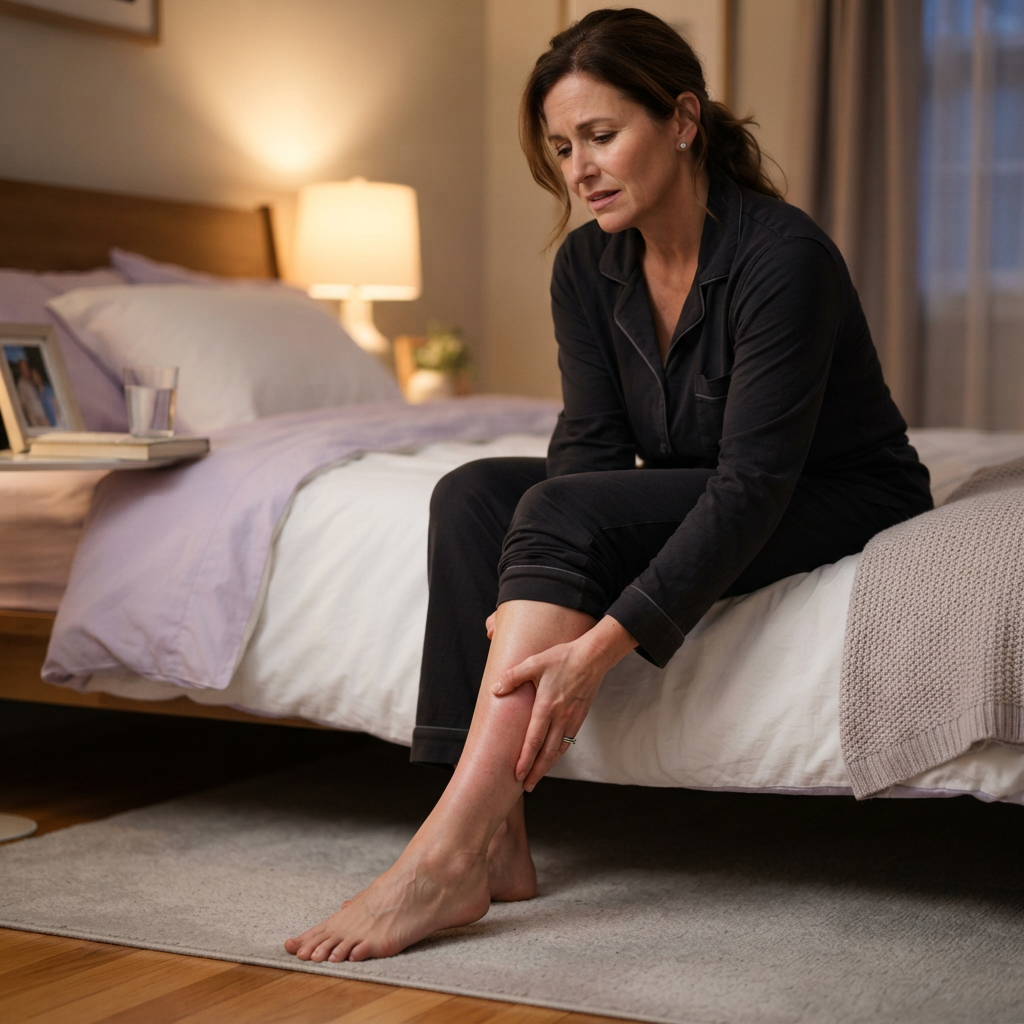
You finally settle into bed after a long day, and then it starts. A persistent itch around your ankles or lower legs that seems to get louder the quieter the room becomes. You scratch, shift positions, and try to ignore it, but the sensation keeps pulling you out of sleep.
Occasional itching is very common and often harmless. But when itchy legs at night keep coming back, there may be more going on than simple dry skin. Possible causes range from skin conditions and medication reactions to nerve irritation and, in some cases, underlying venous disease.
In this article, we walk through seven possible causes, explain how circulation can play a role, and outline when it makes sense to have your symptoms evaluated. Itching alone does not tell us what is wrong, so the goal here is to help you recognize patterns worth discussing with a healthcare professional.
Quick Answer: Why Do My Legs Itch at Night?
Legs often itch at night because of dry skin, eczema, allergic or medication reactions, nerve irritation, or skin inflammation linked to poor venous circulation. Fewer distractions and a warm bed can make the itch more noticeable. Persistent itching with swelling, discoloration, or skin changes should be evaluated.
What Causes Itchy Legs at Night? 7 Possible Causes
Nighttime leg itching has many possible explanations. Some are common and easy to manage at home, while others call for a medical evaluation. Here are seven to consider.
1. Dry skin and environmental irritation
Dry skin is one of the most common reasons for itchy lower legs. The skin on the shins and ankles has fewer oil glands than many other areas, so it can dry out easily, especially in cold weather, in heated indoor air, or after hot showers.
Harsh soaps, fragranced lotions, laundry detergents, and rough fabrics can also irritate the skin. The itch is often worse after bathing or when you undress for bed, and the skin may look flaky, tight, or finely cracked.
2. Eczema and contact dermatitis
Atopic dermatitis (eczema) and contact dermatitis can both cause itchy, inflamed skin on the legs. Eczema often appears as dry, red, or scaly patches and may come and go. Contact dermatitis develops when the skin reacts to something it touched, such as a new detergent, topical product, or fabric.
These conditions are common and are usually evaluated and managed by a primary care physician or dermatologist. They can also coexist with venous skin changes, which is one reason a careful evaluation matters.
3. Chronic venous insufficiency
Chronic venous insufficiency (CVI) occurs when the valves inside the leg veins no longer work well, allowing blood to flow backward (venous reflux) and pool in the lower legs. This can raise pressure in the veins, a state called venous hypertension.
Some people with CVI notice itching, along with leg swelling, heaviness, aching, or skin changes near the ankles. Itching alone does not mean you have CVI, but when it appears alongside these other symptoms, it is reasonable to ask whether the veins may be contributing.
You can read more in our overview of chronic venous insufficiency.
4. Stasis dermatitis, also called venous eczema
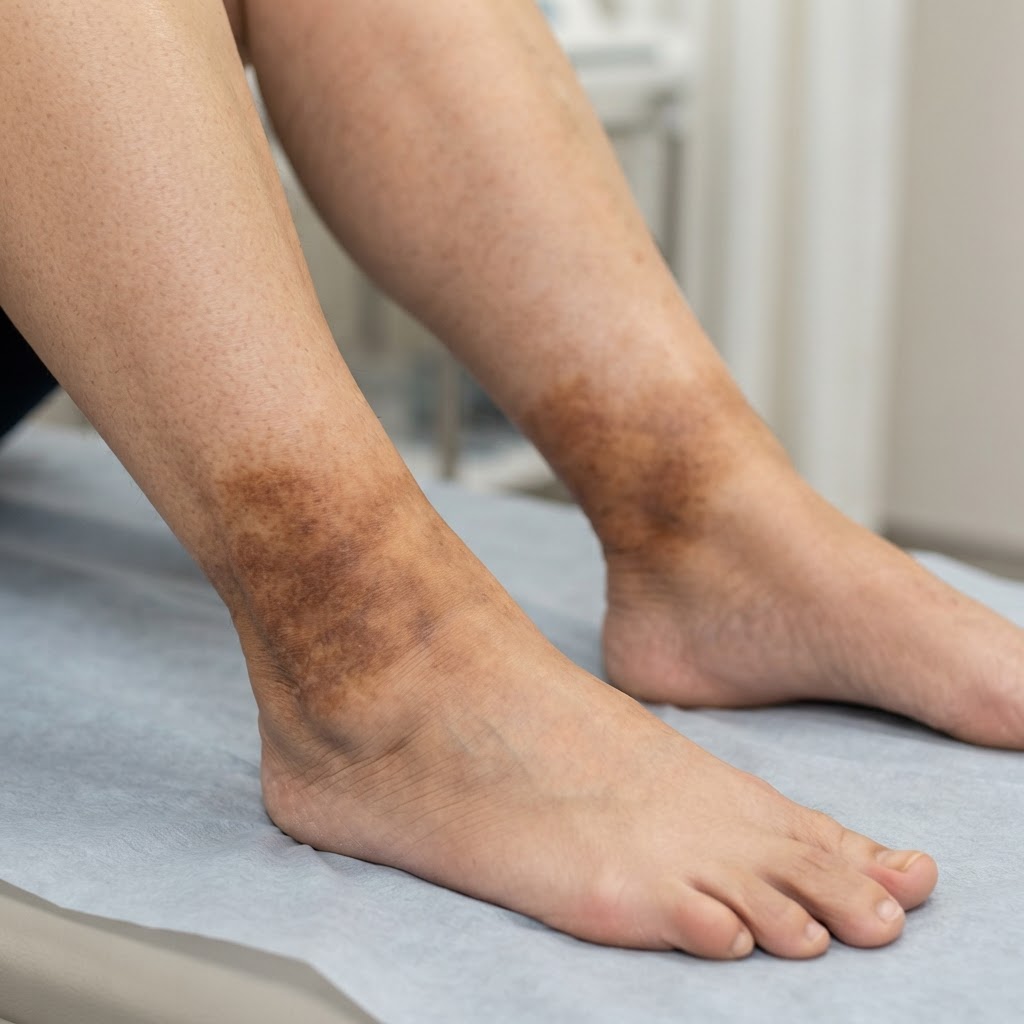
Stasis dermatitis is an inflammatory skin condition that can develop when venous circulation is impaired. Fluid and inflammation in the lower leg tissue can irritate the skin, leading to itching, dryness, scaling, redness, and sometimes brown discoloration around the ankles.
It most often affects the lower legs and inner ankles, and it commonly occurs along with swelling. Because it is linked to underlying venous pressure, skin treatment alone may not fully control it when the venous problem remains unaddressed.
If you have noticed darkening skin, see our article on brown ankle discoloration and hemosiderin staining.
5. Allergic reactions and medication-related itching
Itching can also be a reaction to something you have been exposed to. This includes allergic reactions to foods, plants, topical products, or insect bites, as well as side effects from certain medications. Itching that began soon after starting a new medication or supplement is worth mentioning to your prescriber.
Do not stop a prescribed medication on your own. Instead, speak with your doctor or pharmacist, who can help determine whether the medication may be involved.
6. Nerve-related itching and neuropathy
Sometimes itching comes from the nerves rather than the skin itself. Conditions that affect nerve function, including peripheral neuropathy, can cause itching, tingling, burning, or crawling sensations in the legs, often without any visible rash.
Nerve-related symptoms can overlap with those of venous disease, and the two can occur together.
Our article on the connection between venous insufficiency and neuropathy explains how these conditions can be confused.
7. Other medical conditions, including selected systemic causes
Persistent itching without an obvious skin cause can occasionally be related to a broader medical condition. Examples that clinicians may consider include kidney disease, liver conditions, thyroid disorders, iron deficiency, and diabetes. This does not mean itchy legs usually signal one of these conditions. It simply means that long-lasting, unexplained itching deserves a thorough medical history and, when appropriate, testing.
If your itching is widespread, lasts for weeks, disrupts sleep, or comes with other symptoms such as fatigue, weight changes, or yellowing of the skin, see a healthcare professional promptly.
Can Poor Circulation Make Your Legs Itch?
Yes, in some cases. When venous circulation is impaired, blood can pool in the lower legs and raise pressure inside the veins (venous hypertension). Over time, that pressure can contribute to leg swelling and to inflammation in the surrounding skin, and the irritated skin may itch.
It helps to separate two very different problems:
- Venous problems involve blood flowing back toward the heart. When the one-way valves in the veins weaken, blood pools, causing swelling, heaviness, varicose veins, and skin changes near the ankles.
- Arterial problems involve blood flowing from the heart out to the legs. Narrowed arteries, as in peripheral artery disease, more typically cause leg pain with walking, cool or pale skin, and slow-healing sores.
When people say "poor circulation," they may be describing either one. Because the evaluation and treatment differ, it is important to identify which type of circulation problem, if any, is present.
If swelling is part of your symptoms, see our guide on why legs become swollen.
Why Does Leg Itching Seem Worse at Night?
Many people notice itching more at bedtime, and several factors may contribute:
- Fewer distractions. During the day, work and activity can take your attention away from mild itching. At night, you notice it more.
- Warmth. Heavy blankets and a warm bedroom can increase skin temperature, which can intensify itching.
- Dry skin. Skin can lose moisture over the course of the day, and heated indoor air can make dryness worse overnight.
- End-of-day swelling. If your legs swell while you stand or sit, the skin may feel more irritated by evening.
- Natural nighttime changes. The body's skin and inflammatory processes follow daily rhythms, and itch perception may differ at night.
It is important to note that itching that is worse at night is not a specific sign of vein disease. Many unrelated conditions behave the same way, so the surrounding symptoms matter more than the timing.
How Can You Tell if Itchy Legs Might Be Related to Vein Disease?
Itching is more likely to deserve a vein evaluation when it comes with other signs, such as:
- Ankle or lower-leg swelling.
- Heavy, tired, or aching legs.
- Brown discoloration around the ankles.
- Visible varicose veins.
- Dry, irritated, or inflamed skin on the lower legs.
- Symptoms that worsen after prolonged standing or sitting.
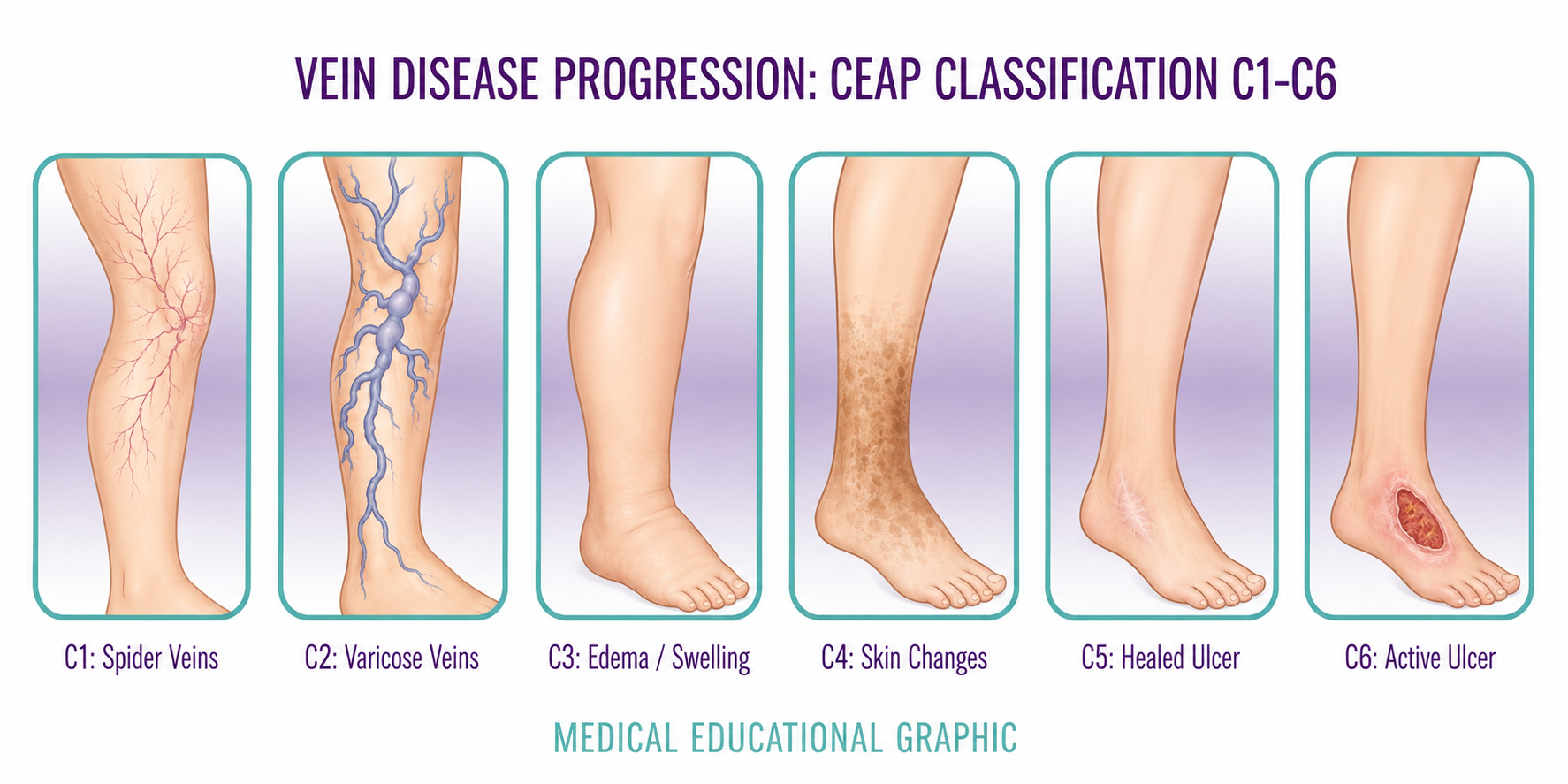
Having one or more of these does not confirm vein disease, but together they can suggest that the veins deserve a closer look. To understand how venous disease can progress, read about the six stages of vein disease.
Dry Skin vs. Stasis Dermatitis: What Is the Difference?
The two can look alike at first. This simple comparison highlights some common differences.
| Feature | Dry Skin | Stasis Dermatitis |
|---|---|---|
| Appearance | Flaky, rough, or finely cracked skin, often without color change. | Red, scaly, or inflamed skin, sometimes with brown discoloration near the ankles. |
| Accompanying symptoms | Tightness; improves with moisturizer. | Ankle swelling, heaviness, or aching; may recur despite moisturizing. |
| Typical location | Shins and other dry areas, often on both legs. | Lower legs and inner ankles, where venous pressure is highest. |
| When to seek evaluation | If itching persists despite good skin care. | When symptoms recur, swelling or discoloration is present, or skin breaks down. |
How Is Venous Insufficiency Diagnosed?
Evaluation usually begins with your medical history and a physical examination. A clinician may ask when the itching started, how often it occurs, whether you have swelling or heaviness, and which medications and skin products you use. They will also look at the skin and veins in your legs.
When a venous cause is suspected, a duplex venous ultrasound may be recommended. This noninvasive test uses sound waves to show how blood is flowing through the leg veins and can identify venous reflux or other abnormalities. Not everyone with itchy legs needs an ultrasound. It is used when the history and exam suggest that vein disease may be contributing.
Because symptoms can overlap with other conditions, it is also common for diagnosis to involve ruling out skin, nerve, and systemic causes. To learn why venous disease is sometimes missed, see why chronic venous insufficiency is often misdiagnosed.
Treatment Options for Itchy Legs Caused by Venous Disease
Treatment depends on the cause. If itching is related to venous disease, management often combines skin care with strategies that support circulation.
Skin Care and Moisturizers
Gentle cleansers, lukewarm showers, and fragrance-free moisturizers applied soon after bathing can help protect the skin barrier. Try to avoid scratching, since broken skin can become infected. A clinician may recommend a topical medication for inflamed skin.
Activity and Leg Elevation
Walking and calf-muscle movement help blood return toward the heart. Elevating your legs above heart level for short periods, and avoiding long stretches of sitting or standing, may help reduce swelling.
Medically Appropriate Compression
Properly fitted compression therapy can help control swelling in appropriately selected patients. Compression should be chosen with medical guidance, particularly if there is any concern about arterial circulation.
Evaluation for Venous Reflux
If testing confirms clinically significant venous reflux, minimally invasive vein procedures may be appropriate for selected patients. Examples include endovenous ablation. These procedures address abnormal blood flow in diseased veins, but they are not right for everyone, and results vary. Treatment is helpful for itching only when the underlying venous condition is contributing to it.
When Should You See a Doctor About Itchy Legs?
Consider scheduling an evaluation if you notice:
- Itching that lasts more than a couple of weeks or keeps returning.
- Itching that interferes with sleep despite good skin care.
- Ankle or lower-leg swelling.
- Brown or reddish discoloration, or thickened skin near the ankles.
- Visible varicose veins, aching, or heaviness.
- A sore or wound that is slow to heal.
When to Seek Urgent Medical Attention
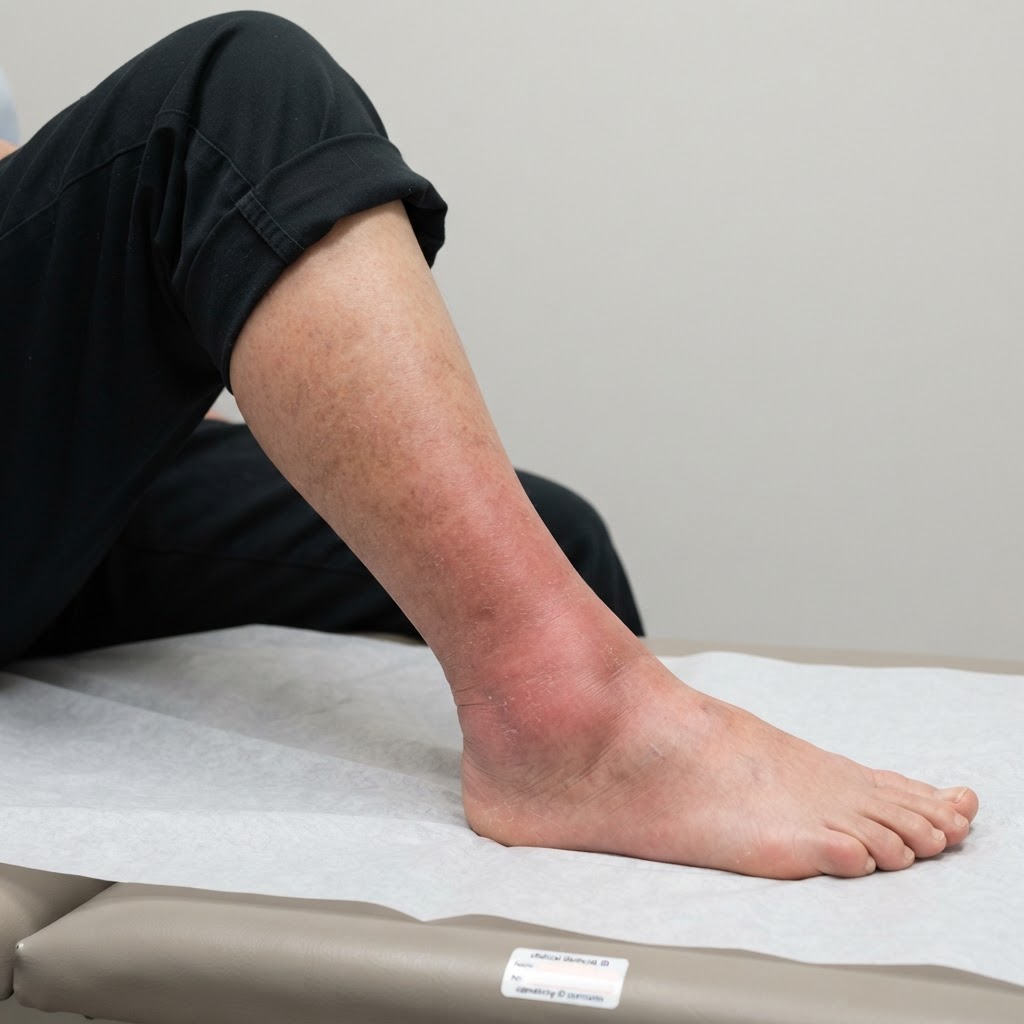
- !Sudden swelling in one leg, especially with pain, warmth, or redness, needs prompt evaluation to rule out a blood clot such as deep vein thrombosis (DVT).
- !Rapidly spreading redness, fever, or a painful, worsening area of skin may signal an infection such as cellulitis and should be seen promptly.
- !An open wound or sore that is draining, growing, or not healing should be evaluated.
- !If you have chest pain, sudden shortness of breath, or fainting, call 911.
Redness and swelling can look similar in vein disease and infection. Our article on venous insufficiency and cellulitis explains how to tell them apart. If a sore has developed, you can also read about venous leg ulcers.
Frequently Asked Questions About Itchy Legs at Night
Why do my legs itch at night but not during the day?
Fewer distractions, a warmer sleep environment, dry skin, and the end-of-day buildup of swelling can all make itching more noticeable at night. Nighttime itching does not by itself point to a specific diagnosis, so persistent symptoms are worth discussing with a healthcare professional.
Can poor circulation cause itchy legs?
It can. Impaired venous circulation may lead to swelling and skin inflammation in the lower legs, which can cause itching. Arterial circulation problems are a different issue and usually cause other symptoms, such as pain with walking or cool, pale skin.
Is itching a symptom of chronic venous insufficiency?
It can be, particularly when it occurs along with ankle swelling, heaviness, or skin changes. However, itching alone does not establish a diagnosis of chronic venous insufficiency, because many other conditions can cause itchy legs.
Why do my ankles itch without a rash?
Itching without a visible rash can result from dry skin, early venous skin changes, nerve-related irritation, medication effects, or certain systemic conditions. If it persists, an evaluation can help identify the cause.
Can varicose veins cause itching?
Yes, in some people. Itching near varicose veins or around the ankles may be related to underlying venous reflux and skin inflammation, though not everyone with varicose veins experiences itching.
Does stasis dermatitis go away?
Stasis dermatitis tends to be a chronic condition when the underlying venous problem is not addressed. Skin care and compression may help control symptoms, and evaluating for venous reflux can help determine whether the underlying cause can be managed.
Can compression stockings help itchy legs?
When itching is related to venous swelling, appropriately selected compression stockings may help reduce swelling and support circulation. They should be used under medical guidance, especially if arterial disease may be present.
When should I see a vein specialist for itchy legs?
Consider an evaluation if itching is persistent or recurring, or if it comes with swelling, aching, heaviness, brown discoloration, visible varicose veins, or skin changes around the ankles.
Additional Reading From Trusted Medical Sources
- Cleveland Clinic: Chronic Venous Insufficiency
- Cleveland Clinic: Stasis Dermatitis
- American Academy of Dermatology: Itchy Skin
Itchy Legs Deserve an Answer, Not Just Another Lotion
Most itchy legs are caused by common, treatable issues such as dry skin or eczema. But when itching persists, especially alongside swelling, heaviness, discoloration, or other skin changes, it is reasonable to ask whether the veins may be involved. A proper evaluation can help sort out the cause and point you toward the right next step.
Experiencing itchy legs, ankle swelling, or unexplained skin changes? America's Vein Doctors by Allure Medical can help evaluate whether an underlying vein condition may be contributing to your symptoms. Schedule a vein evaluation today.
Schedule a Vein EvaluationThis article is intended for educational purposes and does not replace individualized medical advice, diagnosis, or treatment. If you have concerns about new or worsening symptoms, consult an appropriate healthcare professional.
Dr. Robert Musson
America's Vein Doctors by Allure Medical
Dr. Robert Musson contributes educational articles focused on chronic venous insufficiency, vein disease, circulation, and the symptoms that can affect patients' long-term health and quality of life.