Have you ever reached the end of the day with tired, aching, or swollen legs and assumed it was simply because you were on your feet too long?
You're not alone.
Many people experience leg discomfort for months or even years without realizing their symptoms could be related to an underlying vein condition.
While occasional leg fatigue is common, persistent heaviness, swelling, visible veins, or changes in your skin may indicate chronic venous insufficiency (CVI), a condition that affects how blood returns from your legs to your heart. You can learn more on our chronic venous insufficiency page.
At America's Vein Doctors by Allure Medical, we help patients understand the underlying causes of their leg symptoms and determine whether vein treatment may be appropriate.
Quick Answer: When Should You See a Vein Specialist?
You should consider seeing a vein specialist if you experience persistent leg swelling, aching or heavy legs, painful varicose veins, skin discoloration around your ankles, or wounds that are slow to heal.
These symptoms can be associated with chronic venous insufficiency, particularly when they worsen after prolonged sitting or standing. A vein specialist can evaluate your symptoms and determine whether a duplex ultrasound or other testing is necessary.
What Is Chronic Venous Insufficiency?
Your leg veins have an important job: carrying blood back toward your heart.
Healthy veins contain small, one-way valves that help prevent blood from flowing backward. When these valves become weakened or damaged, blood can flow in the wrong direction and accumulate in the lower legs.
This backward flow, known as venous reflux, can increase pressure inside the veins and contribute to swelling, discomfort, and changes in the surrounding skin.
Over time, chronic venous insufficiency may affect your mobility, comfort, and quality of life.
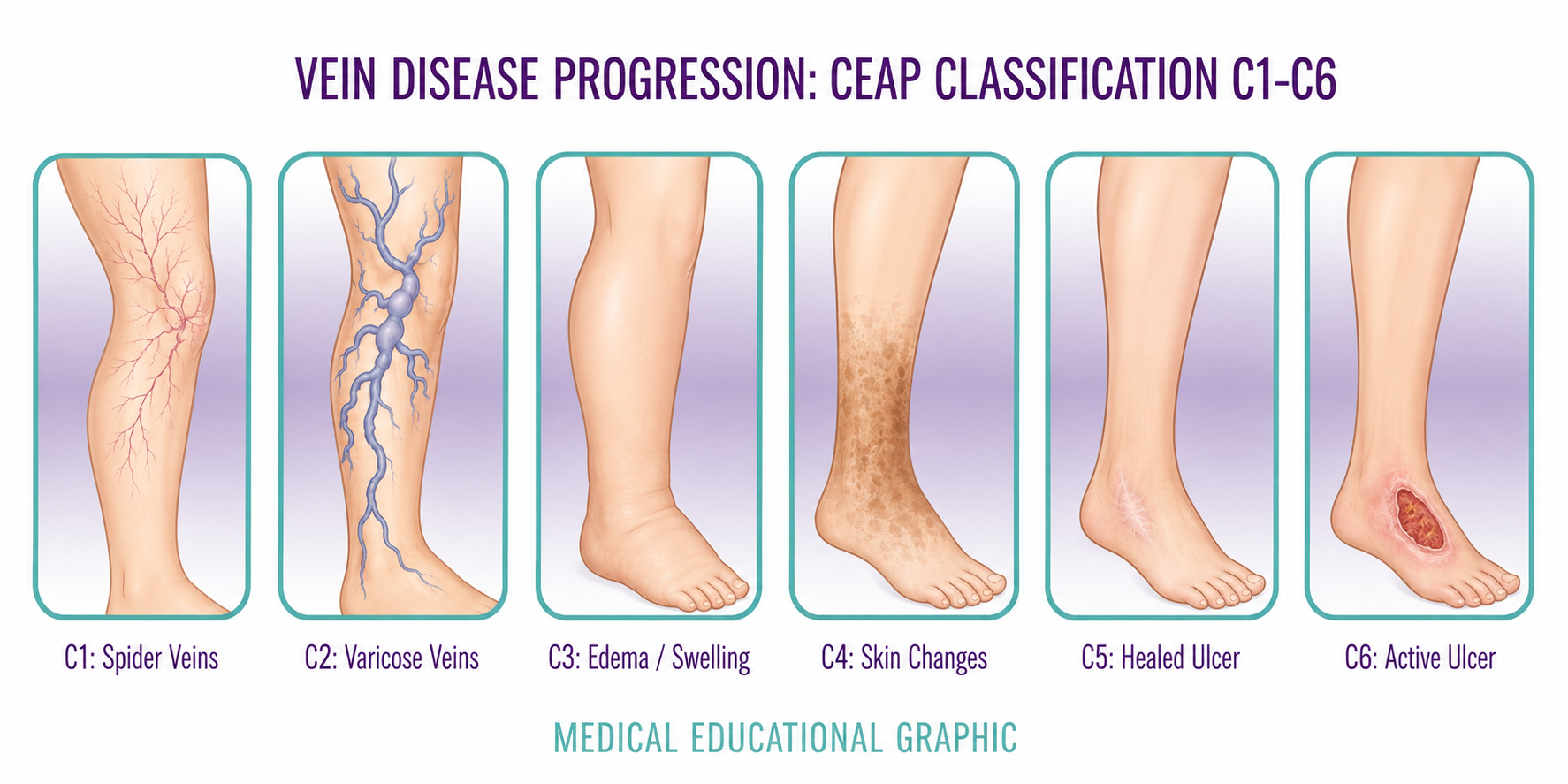
One of the most important things to understand is that you can have vein disease without having large, visible varicose veins. To see how the condition can progress, read about the six stages of vein disease.
7 Signs You May Need to See a Vein Specialist
1. Your Legs Feel Heavy or Achy at the End of the Day
Do your legs feel unusually tired, heavy, or uncomfortable after standing or sitting for extended periods?
Persistent leg heaviness is a common symptom of venous insufficiency.
When blood has difficulty returning toward the heart, increased pressure in the leg veins may contribute to aching, throbbing, or fatigue.
You may notice that your symptoms improve when you elevate your legs or move around.
If your legs regularly feel heavy or uncomfortable, a vein evaluation may help identify whether circulation is contributing to your symptoms. Our leg pain page explains more.
2. Your Ankles or Lower Legs Frequently Swell
Swelling around your ankles is not always a normal part of aging.
Venous insufficiency can cause fluid to accumulate in the tissues of the lower legs, particularly after prolonged standing or sitting.
Common signs include:
- Shoes that feel tighter in the evening
- Deep sock marks around your ankles
- Swelling that increases throughout the day
- Legs that feel heavy or uncomfortable
However, leg swelling can also result from medications, lymphatic conditions, heart disease, kidney problems, and other medical conditions.
Persistent swelling deserves a medical evaluation rather than an assumption that vein disease is the cause. See our guides on why legs become swollen and deep sock marks on the legs, or visit our leg swelling page.
3. You Have Visible, Bulging, or Painful Varicose Veins
Varicose veins are enlarged, twisted veins that may appear blue, purple, or raised above the skin.
Although some varicose veins are primarily a cosmetic concern, others are associated with venous reflux.
Symptoms may include aching, itching, burning, tenderness, or discomfort around the affected veins.
Visible varicose veins accompanied by persistent symptoms are a good reason to speak with a vein specialist. Learn more about varicose veins.
4. Your Legs Itch, Burn, or Feel Irritated
Persistent itching or burning around the lower legs may be more than dry skin.
When venous pressure remains elevated, inflammation can affect the surrounding tissues and skin.
Some patients develop venous eczema, also called stasis dermatitis, which can cause redness, dryness, scaling, and irritation.
These symptoms can resemble other skin conditions, making an accurate diagnosis important. Read more in our article on why lower legs itch at night.
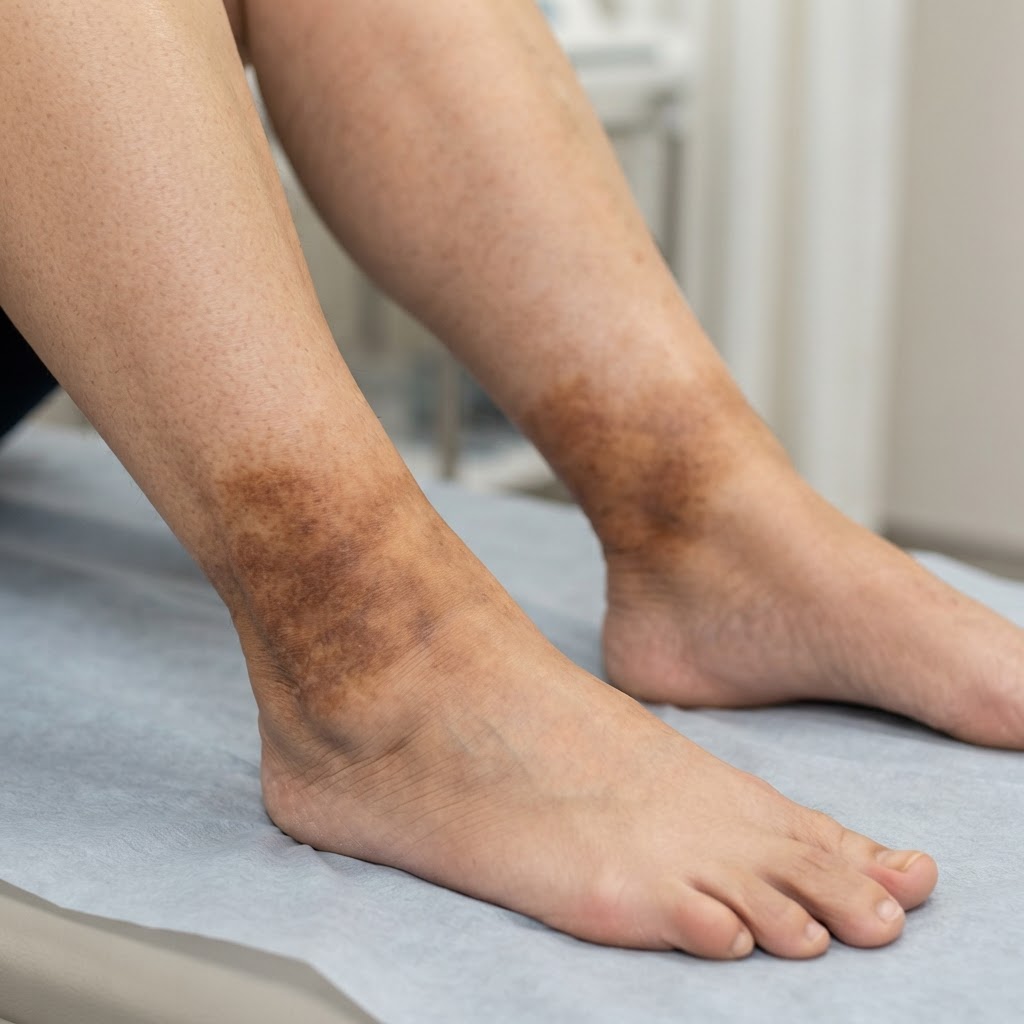
5. The Skin Around Your Ankles Is Turning Brown or Red
Have you noticed darkening skin around your ankles or lower legs?
Brown or reddish discoloration may be associated with hemosiderin staining, which can develop when prolonged venous pressure allows blood components to leak into surrounding tissues.
These skin changes may indicate more advanced chronic venous disease.
They should not automatically be dismissed as ordinary aging or cosmetic discoloration.
Learn more in our article, Why Is the Skin Around My Ankles Turning Brown?
6. You Experience Recurring Leg Discomfort That Interferes With Daily Activities
Leg discomfort that regularly affects your ability to walk, work, exercise, or sleep deserves attention.
Venous insufficiency may contribute to aching, heaviness, or discomfort that worsens after spending extended periods in one position.
However, similar symptoms can also occur with nerve disorders, muscle problems, arthritis, or peripheral arterial disease.
A medical evaluation can help distinguish between these conditions and determine the appropriate next steps. To learn why vein disease is sometimes overlooked, see why chronic venous insufficiency is often misdiagnosed.
7. You Have a Slow-Healing Sore Near Your Ankle
A wound on the lower leg that does not heal normally may be a sign of advanced venous disease.
Venous leg ulcers commonly develop around the ankle and can be associated with long-standing venous hypertension.
These wounds require prompt medical assessment.
Treating the wound is important, but identifying and addressing any underlying venous problem may also improve healing and reduce the risk of recurrence.
Learn more about Venous Leg Ulcers: Why They Keep Coming Back and How Treating the Cause Can Help. You can also visit our leg ulcers page.
Can You Have Vein Disease Without Visible Varicose Veins?
Yes. Chronic venous insufficiency can occur even when there are no obvious bulging veins.
Some patients experience swelling, heaviness, aching, or skin changes without noticeable varicose veins.
That is one reason vein disease may be overlooked.
A physical examination and, when appropriate, a duplex ultrasound can help determine whether abnormal blood flow is contributing to symptoms.
How Does a Vein Specialist Diagnose Venous Insufficiency?
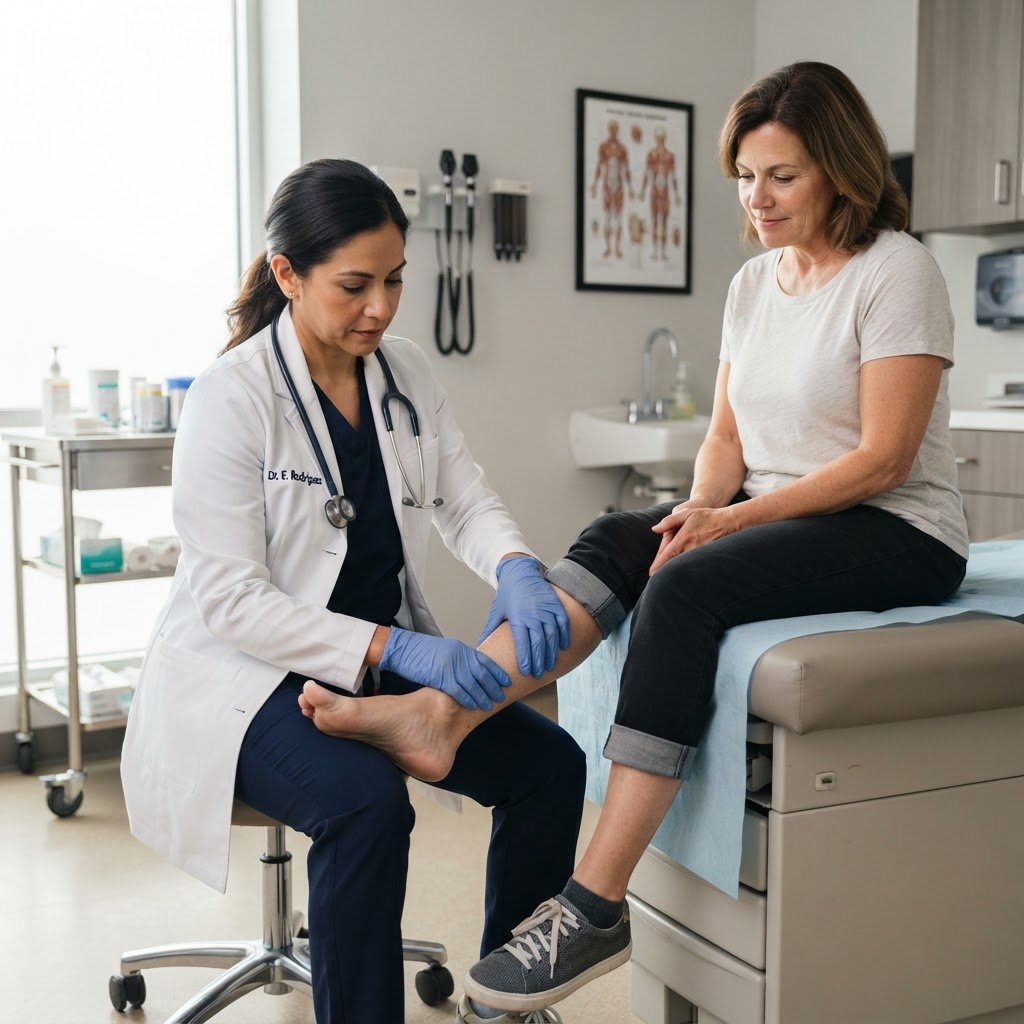
A vein specialist begins by reviewing your symptoms, medical history, and physical examination findings.
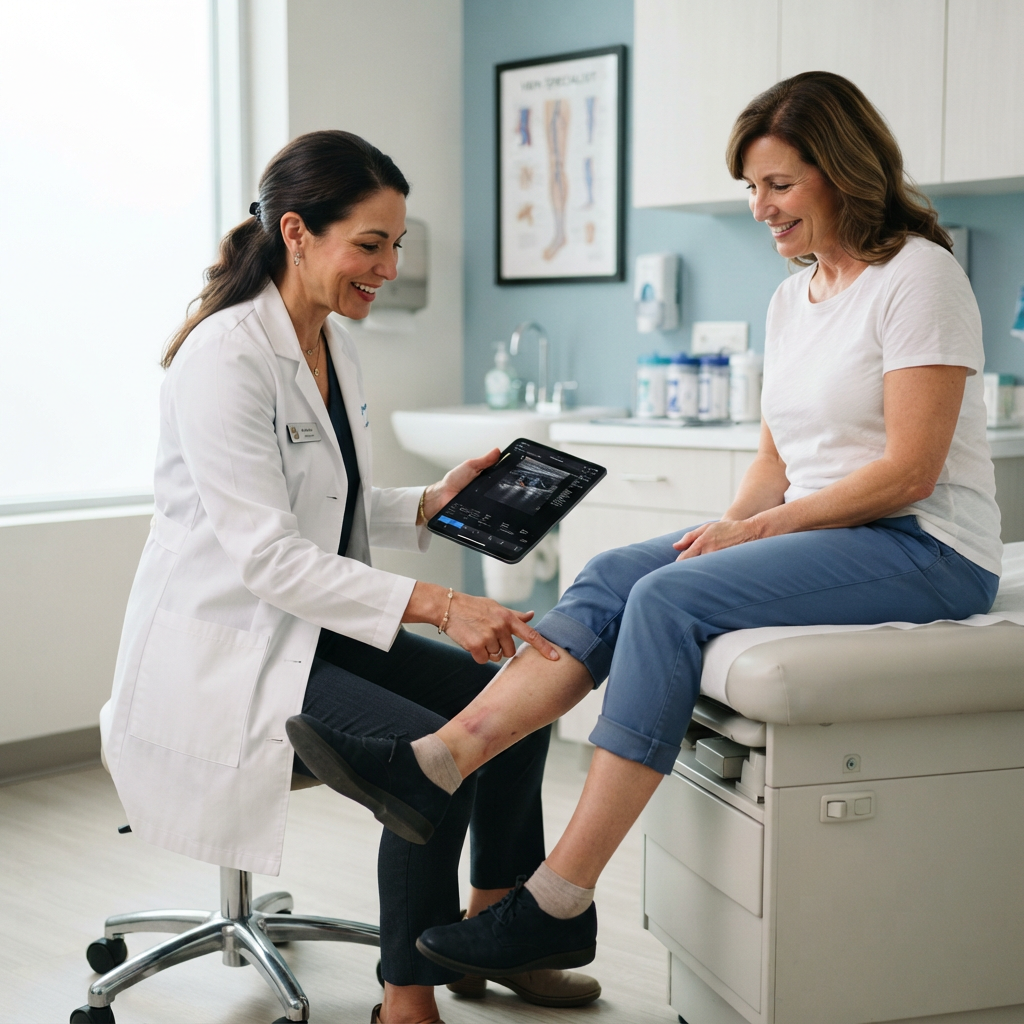
When indicated, a duplex ultrasound provides a noninvasive way to evaluate the veins and measure blood flow.
This examination can help identify:
- Veins with abnormal backward blood flow
- Problems involving vein valves
- The location and extent of venous reflux
- Other abnormalities that may require further evaluation
Duplex ultrasound is recommended by major vascular medical societies as the diagnostic test of choice when evaluating lower-extremity venous reflux.
What Treatments Are Available for Vein Disease?
Treatment depends on your symptoms, examination findings, ultrasound results, and overall medical history.
Some patients benefit from conservative approaches, including regular walking, leg elevation, and compression therapy when medically appropriate.
For patients with symptomatic venous reflux, minimally invasive treatment may be recommended.
America's Vein Doctors offers treatment options for selected patients, including:
- Endovenous Laser Therapy (EVLT): Uses laser energy to close an unhealthy vein and redirect blood through healthier veins.
- Radiofrequency Ablation: Uses controlled heat energy to close veins affected by reflux.
- Varithena: An injectable microfoam treatment used for certain types of diseased superficial veins.
- Sclerotherapy: Uses an injected solution to treat selected abnormal veins.
Not every patient needs a procedure. The most appropriate approach depends on an individualized medical evaluation.
When Is Leg Pain or Swelling an Emergency?
When to Seek Urgent Medical Attention
Not all leg symptoms should wait for a routine vein appointment.
Sudden swelling in one leg, especially when accompanied by pain, warmth, or redness, may indicate a deep vein thrombosis (DVT) and requires urgent medical evaluation. Read more in our guide to deep vein thrombosis.
Call 911 if you experience chest pain, sudden shortness of breath, fainting, or coughing up blood, as these may be signs of a pulmonary embolism.
Find a Vein Specialist Near You in Michigan or South Carolina
If you are experiencing persistent leg swelling, aching, heaviness, or visible varicose veins, America's Vein Doctors can help you understand whether vein disease may be contributing to your symptoms.
We offer vein care at seven locations:
South Carolina
Our team evaluates venous conditions and develops individualized recommendations based on each patient's needs.
Schedule Your Free Vein Screening
You do not have to assume that persistent leg discomfort is simply part of getting older.
Understanding the cause of your symptoms is the first step toward finding an appropriate treatment plan.
Schedule a free vein screening with America's Vein Doctors today. Visit americasveindoctors.com or call 866-692-4907 to learn more.
Schedule a Free Vein ScreeningFrequently Asked Questions
What kind of doctor should I see for leg swelling and varicose veins?
A vein specialist can evaluate symptoms associated with venous insufficiency and varicose veins. Because leg swelling has several possible causes, your primary care provider may also help determine whether additional evaluation is needed.
Can poor circulation cause heavy legs?
Yes. Problems with venous blood flow can contribute to leg heaviness and aching. However, the term "poor circulation" can refer to several different conditions, including arterial and venous disorders.
How do I know if my leg pain is caused by veins?
Venous discomfort often worsens after prolonged sitting or standing and may improve with walking or leg elevation. These patterns are not diagnostic by themselves. An examination and appropriate testing can help determine the cause.
Do I need visible varicose veins to have venous insufficiency?
No. Some patients experience leg swelling, heaviness, aching, or skin changes without prominent visible varicose veins.
Is vein treatment covered by insurance?
Many medically necessary vein treatments may be covered by Medicare or private insurance, depending on the diagnosis, documented symptoms, treatment criteria, and individual policy. Coverage should be verified before treatment.
Are vein treatments painful?
Many minimally invasive vein procedures are performed using local anesthesia and are generally well tolerated. Discomfort, recovery, and potential risks vary by procedure and patient.
Can venous insufficiency go away on its own?
Established venous valve damage generally does not reverse on its own. Symptoms may improve with conservative measures, and appropriate medical treatment can address certain underlying vein problems.
Medical Sources
- Society for Vascular Surgery, American Venous Forum, and American Vein & Lymphatic Society. Clinical Practice Guidelines for the Management of Varicose Veins of the Lower Extremities, Part I and Part II.
- Society for Vascular Surgery. Clinical Guidelines and Reporting Standards.
- America's Vein Doctors. The Six Stages of Vein Disease: When Should You Be Concerned?
- America's Vein Doctors. Venous Leg Ulcers: Why They Keep Coming Back and How Treating the Cause Can Help
Medical Disclaimer: This article is intended for general educational purposes and does not replace medical advice, diagnosis, or treatment from a qualified healthcare professional. Symptoms and treatment recommendations vary by patient.
Dr. Robert Musson
America's Vein Doctors by Allure Medical
Dr. Robert Musson contributes educational articles focused on chronic venous insufficiency, vein disease, circulation, and the symptoms that can affect patients' long-term health and quality of life.